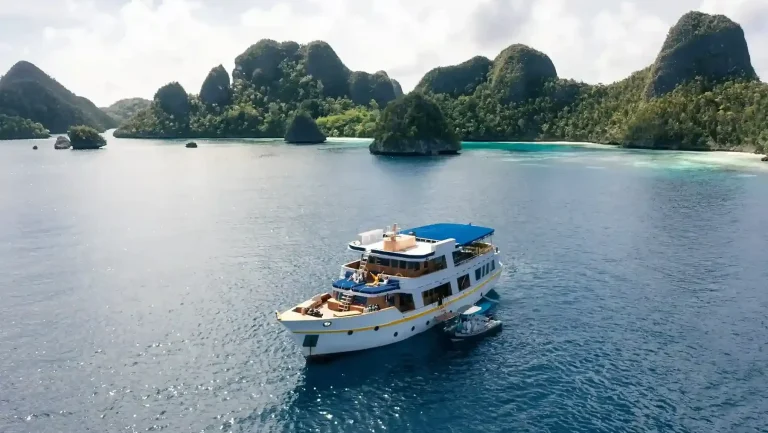
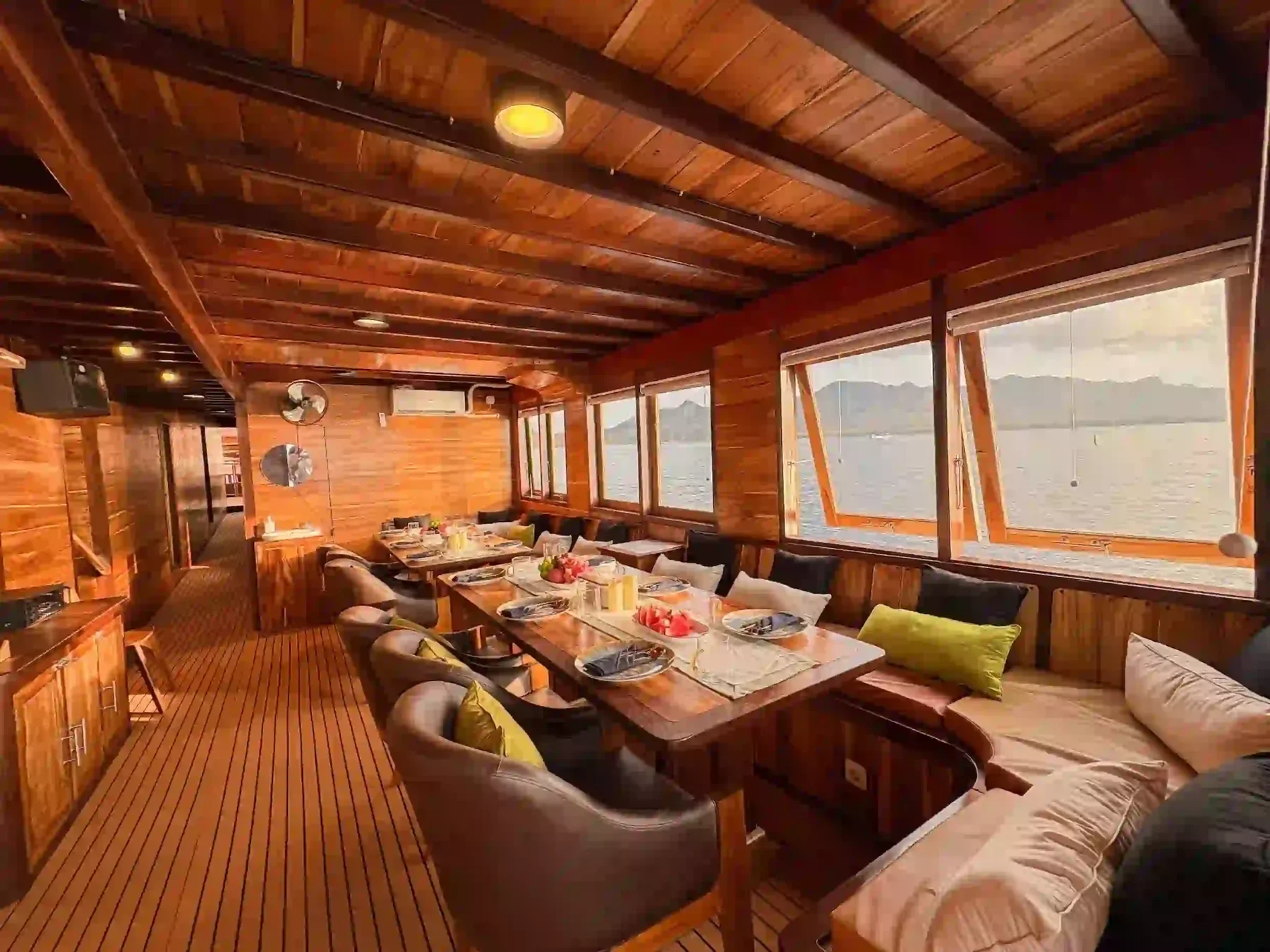

Every meal on a Raja Ampat yacht charter is included in your rate and cooked fresh on board — expect Indonesian-Papuan seafood, tropical fruit and familiar Western staples, adjusted daily to what the crew lands and what you request. Dinner might be charcoal-grilled snapper eaten on deck at anchor; lunch might be a barbecue on a sandbar below the Wayag karsts. Here is what to expect, course by course.
What Cuisine Defines a Raja Ampat Charter Galley?
The backbone of onboard cooking is Indonesian-Papuan: kuah kuning, a turmeric-and-lime fish soup that appears across West Papua; ikan bakar, whole fish grilled over charcoal with sambal; papeda, the region’s silky sago porridge served with a savoury broth; and sago lempeng, a dense palm-sugar flatbread eaten as a snack. Around that core, chefs rotate pan-Indonesian classics — nasi goreng, satay, gado-gado, rendang — alongside Western breakfasts and lighter Mediterranean-style lunches for guests who want a break from spice.
Because the archipelago sits in the heart of the Coral Triangle, seafood dominates. Reef fish, tuna, prawns and squid come aboard iced from Sorong’s markets or from licensed local suppliers met along the route, which is why the fish on your plate rarely spent more than a day out of the water. As a charter operated by Komodo Luxury, established 2015, menus are discussed with our concierge team before departure, so the galley provisions around your preferences rather than a fixed menu card.
What Does a Full Day of Meals Look Like on Board?
Most vessels run four to five service moments a day, timed around dives, hikes and passages. A representative day reads like this:
| Meal | Typical dishes | Notes |
|---|---|---|
| Breakfast | Bubur kacang hijau, eggs to order, tropical fruit, roti, Papuan coffee | Served early before the first dive or Wayag climb |
| Mid-morning | Pisang goreng, fresh juice | Waiting on deck after the first activity |
| Lunch | Ikan bakar Manokwari, seafood nasi goreng, stir-fried greens | Light, rice-based, often al fresco |
| Afternoon | Sago lempeng, kue, tea and coffee | During passage between anchorages |
| Dinner | Kuah kuning, papeda with yellow fish broth, grilled snapper or prawns | The most elaborate service, usually at anchor |
Portions are generous because charter days are active: two or three dives, a ridge hike or a village walk burn through a surprising amount of energy. Tell the crew if you would rather eat lighter — galleys adjust within a day.
How Do Chefs Keep Food Fresh So Far From a Market?
Sorong is the last full provisioning stop before the islands. Once the yacht clears the harbour, the nearest resupply is a village kiosk — Arborek, for reference, lies about 53 nautical miles and roughly eight hours’ cruising from Sorong. Galleys therefore load cold storage in port and sequence the menu deliberately: delicate greens and berries appear in the first days, while hardier produce, root vegetables and frozen stock carry the second half of the itinerary. Fresh fish bridges the gap throughout, bought iced from local suppliers encountered along the route.
On longer voyages — a Misool loop or a combined north-and-south itinerary of ten to twelve nights — this sequencing is planned with the concierge desk before departure, which is one reason we ask for dietary notes early rather than at the gangway.
Can the Galley Handle Dietary Requirements?
Yes, with notice. Vegetarian, vegan, gluten-free, halal, child-friendly and allergy-aware menus are all routine requests across the partner fleet, but they must be flagged at booking: there is no supermarket in the Dampier Strait, so anything unusual has to be loaded in Sorong or shipped ahead. Our concierge team collects a preference sheet for every guest — dislikes, allergies, spice tolerance, coffee order — and passes it to the chef before provisioning day. Guests with severe allergies should also carry their own medication, as the nearest pharmacy is hours away by sea.
Which Dining Moments Happen Off the Yacht?
Some of the most memorable meals leave the boat entirely. Crews regularly set up beach barbecues on uninhabited sandbars — grilled fish, salads and cold drinks carried ashore by tender. At Arborek village, a community known for its jetty and warm hospitality, you can taste fish prepared by local families, an experience worth requesting in your itinerary. And below the Piaynemo viewpoint, a picnic on deck or on the beach after the ridge walk pairs the archipelago’s most photographed panorama with its simplest pleasures.
Coffee deserves its own mention: Papua grows some of Indonesia’s most interesting beans, and a slow pot on deck at first light — karsts silhouetted, water like glass — is a ritual many guests rank alongside the diving. Ask the crew to brew local coffee rather than the imported jar if provenance matters to you.
Does Vessel Class Change What You Eat?
Meaningfully, yes — cuisine tracks the charter band. Aboard an entry phinisi, from about $1,500 per night whole-boat (rates verified August 2026), expect honest Indonesian home cooking served family-style. Mid-luxury vessels from around $4,500 per night carry a dedicated chef plating individual courses. In the premium band of $6,000–10,000 per night, menus broaden into serious international territory, and on flagship yachts of the Lamima and Aqua Blu class — $12,000–16,000 per night — galley teams deliver fine-dining service, from long deck lunches to multi-course dinners with wine service. If the food matters as much as the diving, say so: it changes which vessel we recommend from the phinisi fleet.
Are Meals Included in the Charter Price?
On virtually every Raja Ampat charter, full board is included: all meals, snacks, drinking water, tea and coffee. Alcohol is the usual exception — some vessels run a stocked bar billed on consumption, others welcome your own bottles with or without corkage — so confirm the policy for your yacht at booking. Per-person liveaboard berths, from roughly $350 per night per person (verified August 2026), likewise include full board. For a complete breakdown of what sits inside and outside the rate, see our Raja Ampat charter cost guide.
When Is Deck Dining at Its Best?
The prime season runs October to April, when calmer seas and settled evenings make open-deck dinners the default rather than the exception. Raja Ampat can be sailed year-round, and the quieter low-season months bring softer rates and emptier anchorages — you may simply trade a few al fresco dinners for the saloon when a shower passes through. Either way, the galley never takes a season off.
Frequently Asked Questions
Is alcohol included in a Raja Ampat charter?
Usually not in the base rate. Policies vary by vessel — stocked bar on consumption, bring-your-own with corkage, or packages arranged in advance — so confirm with the concierge desk when booking.
Can the chef cook for children?
Yes. Kid-friendly meals, earlier service times and milder spice levels are standard requests; note them on your preference sheet and the galley plans accordingly.
Can we catch our own dinner?
Raja Ampat is a marine park with strict zone regulations, so recreational fishing is restricted in most areas. Crews source fresh fish from licensed local suppliers instead — ask your captain what is permitted on your specific route.
Hungry already? Message our concierge desk on WhatsApp at +62 811-3810-8110 or email sales@komodoluxury.com with your dates and dietary notes, and we will match you to the galley — and the yacht — that fits. Plan my charter.