The season in one paragraph
Charters typically embark from Sorong (SOQ), the gateway to Raja Ampat — book early for December to March, when the fleet fills fastest.
Oct–Apr
The charter season
30 m
Best visibility, February
10 m
Worst visibility, July
Dec–Mar
Manta ray peak season
The Year At A Glance
Month By Month
Manta peak continues through the second wet-season month. Diving stays excellent despite the rain.
The technical sweet spot — calmest water of the peak, best for experienced divers.
Manta season winds down. Widely considered the best month for underwater photography.
The calmest water of the entire year, and the last month before the shoulder season begins.
Some plankton in the water. Workable for shorter charters, less reliable for the long crossings.
Long crossings are best avoided. Visibility drops with runoff and plankton.
The worst visibility of the year. Most vessels skip Misool entirely this month.
Visibility stays poor and few vessels operate a full route.
Conditions start to recover. Still windy, but workable for shorter itineraries.
The season opener — strong value, and manta rays begin appearing again.
Peak manta season begins, with some of the best visibility of the year.
Manta activity peaks alongside the highest visitor numbers. Plankton blooms can soften visibility slightly.
Diving Or Leisure
October to April — The full season. Optimal visibility, calm seas, and marine life at its most active — manta rays, reef fish and the long crossings all workable.
February to April — The calmest window inside the season, when scenic cruising and relaxed diving matter more than chasing peak marine-life activity.
Questions
October to April. Manta ray sightings peak December to March, and visibility is at its best February to April. June through August is the windiest stretch, and most vessels reduce or skip the long crossings then.
February, if diving is the priority — the calmest water and the best visibility of the peak season. April, if leisure and scenery matter more than marine-life density.
Not necessarily, but plan around it. Visibility drops to 10–15 metres, the Misool crossing is often skipped, and a charter that runs then will likely stay closer to the Dampier Strait.
The earlier the better for December to March — that is when both manta activity and visitor numbers peak together, and the fleet fills fastest.
The marine park permit — IDR 1,700,000 per international visitor, IDR 725,000 for Indonesian citizens, valid twelve months — plus your flights and any transfers.
Go Deeper
Silo 6
Match your season to a route — four to fourteen nights.
Read guide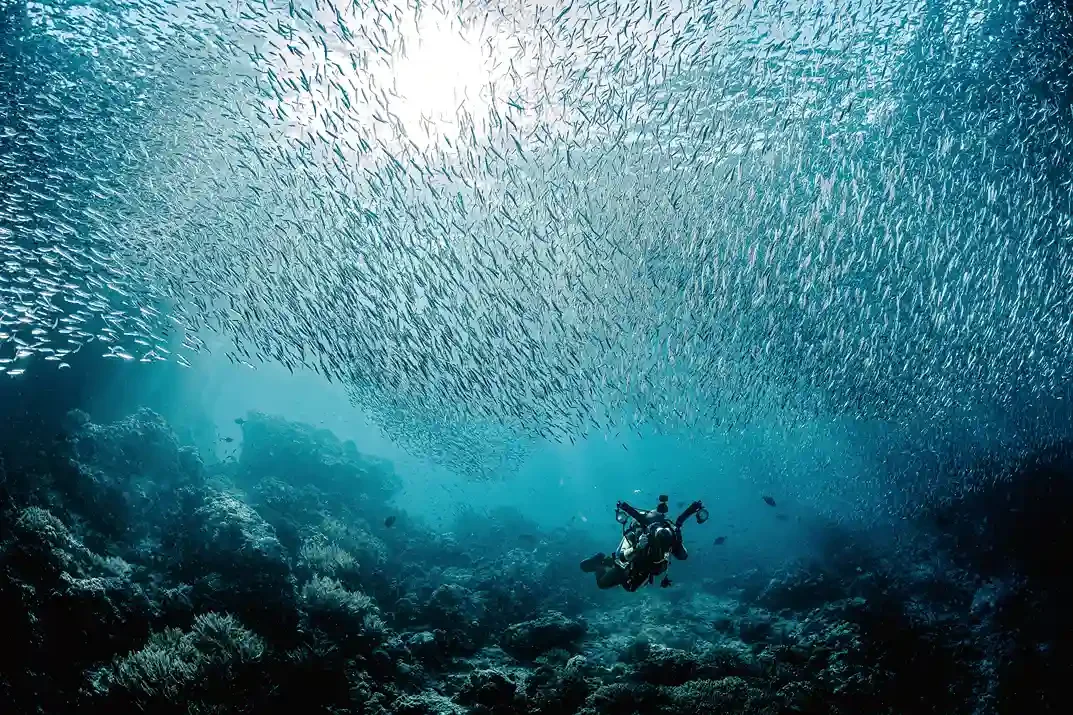
Silo 6
The route most first charters book, day by day.
Read guide
Silo 4
Every signature site, with its own season notes.
Read guide
Silo 4
What the entry fee is, who needs one, and what it pays for.
Read guide
Pick Your Dates
If your dates fall in June to August, we would rather set expectations now — a shorter, Dampier-only route, most likely — than have you find out at sea.