Private Triton Bay yacht charter from Kaimana: soft-coral reefs, whale sharks at Namatota, Oct-Apr season, phinisi from $1,500/night. Verified August 2026.
A Triton Bay yacht charter puts a private phinisi or expedition yacht into one of the least-visited corners of the Bird’s Head Seascape: the soft-coral reefs, karst channels and whale shark waters around Kaimana, West Papua. The season runs October to April, whole-boat rates start from around $1,500 per night for an entry phinisi and $4,500 per night for mid-luxury vessels, and most charters run 7-12 nights, either Kaimana-centred or as an extension from Misool. Every charter is arranged end-to-end by our concierge desk, operated by Komodo Luxury since 2015.
Because there is essentially no other way to see it properly. Triton Bay has no resort infrastructure to speak of, few scheduled departures and long distances between highlights, which is exactly what has kept it pristine. A private yacht charter turns those constraints into the whole point: your vessel is the base, the restaurant and the dive centre, anchored each night in a limestone bay you will likely have entirely to yourselves.
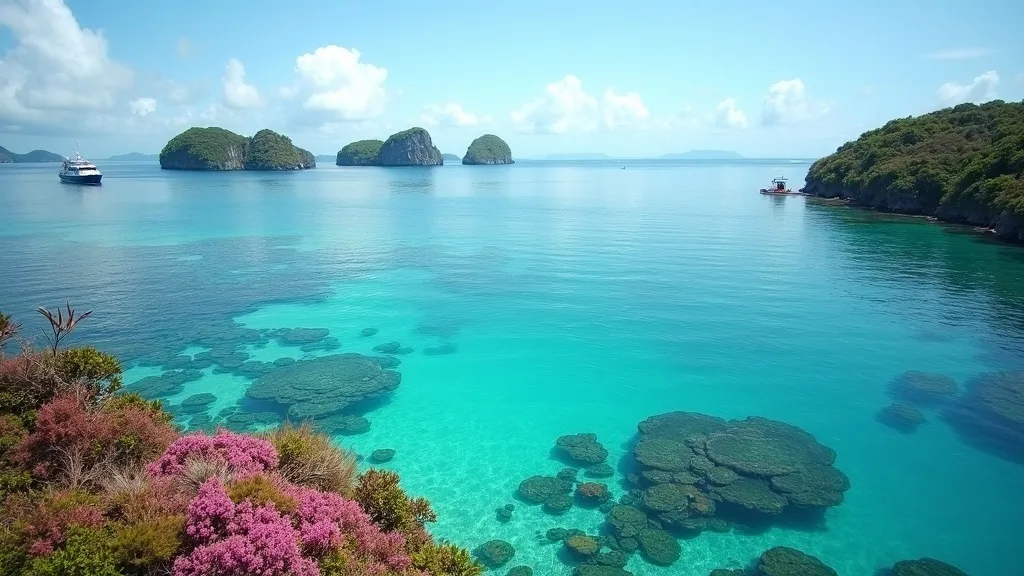
The diving and snorkelling profile is distinct from Raja Ampat’s. Where the Dampier Strait is about current-swept fish action, Triton Bay is about colour at close range: soft corals in improbable density, thriving in green, nutrient-rich water that concentrates life onto every slope. It sits within the Bird’s Head Seascape, the region scientific surveys credit with 1,700+ fish species and 550+ coral species, and it adds the encounter Raja Ampat cannot promise: whale sharks that gather around the bagan fishing platforms of Namatota and the Iris Strait.
This is also, frankly, a connoisseur’s route. First-time Indonesia charterers usually start with a Raja Ampat yacht charter; Triton Bay is where returning guests go next.
October through April, the same weather window as Raja Ampat. Seas are at their calmest, visibility on the soft-coral slopes is at its best, and the whale shark platforms at Namatota are workable in settled conditions. Outside the season most expedition vessels rotate to other Indonesian regions, so in-season planning matters.
| Month band | Conditions | Planning note |
|---|---|---|
| October-November | Season opens, settled seas | Good availability, shoulder rates |
| December-March | Prime conditions | Peak demand; 10-20% premium, book 9-12 months ahead |
| April | Season close, calm and quiet | Pairs well with repositioning itineraries |
Whole-vessel pricing follows the same bands as the wider Raja Ampat fleet, with routing and fuel detail confirmed per itinerary. Rates verified August 2026.
| Charter style | Rate (USD) |
|---|---|
| Entry phinisi, whole boat | from ~$1,500 per night |
| Mid-luxury, whole boat | from ~$4,500 per night |
| Premium phinisi, whole boat | $6,000-10,000 per night |
| Flagship class, whole boat | $12,000-16,000 per night |
| Liveaboard cabin, per person | from ~$350 per night |
The full framework, including what is and is not included in a typical charter, is in the Raja Ampat yacht charter cost guide.
There are two practical approaches, and your choice shapes the itinerary. The first is to fly into Sorong, board there and sail the full arc south through Misool, reaching Triton Bay after roughly two days’ sail from the southern lagoons; this is the celebrated 10-12 night combined routing covered in our Raja Ampat to Triton Bay and Kaimana itinerary. The second is a Kaimana-centred charter, embarking and disembarking near the bay itself, which concentrates every charter day on Triton Bay’s reefs and the Namatota whale shark waters. Our concierge team confirms current domestic flight routings and handles every transfer, so the logistics reach you as a single seamless plan rather than a puzzle.
Range and self-sufficiency matter more here than in central Raja Ampat, so expedition-grade vessels and well-found phinisi lead the shortlist. Kudanil Explorer, a 56m expedition ship built for exactly this kind of remoteness, runs from $175,000 per week + expenses; a number of premium phinisi in the 30+ vessel partner fleet network quote Triton Bay on application within their class band. Divers who prefer a per-cabin format can compare the Raja Ampat dive liveaboard options, several of which schedule Triton Bay departures in season.
Think of Raja Ampat as the grand tour and Triton Bay as the private view. The Dampier Strait concentrates world-famous sites within short cruising distances, which is why it fills first and why its marquee reefs see daily visitors in season. Triton Bay trades that density for solitude: longer legs between highlights, greener water, softer reefs, and anchorages where the only lights ashore belong to fishing bagans. The wildlife emphasis shifts too, from Raja Ampat’s mantas and current-swept fish schools to Triton Bay’s whale sharks and macro-rich soft-coral slopes. Guests who have sailed both tend to describe Raja Ampat as the place they fell for Indonesia, and Triton Bay as the place they kept to themselves.
Yes, provided expectations are set honestly. The whale shark encounters at Namatota are run snorkel-first, so confident swimmers get the region’s headline experience without a certification card, and the karst channels reward kayakers and tender explorers as richly as divers. Children who are comfortable in open water thrive here; very young children are a harder fit, given the region’s remoteness and sailing legs. Connectivity is limited and medical facilities are distant, so we recommend comprehensive travel insurance and we match the vessel to the group: stabilised expedition ships for mixed parties, shallower-draft phinisi for lagoon-hopping families. Your concierge will tell you plainly if another routing suits your group better.
Tell us your dates, group size and how you weight the trip between whale sharks, reefs and pure seclusion. Because charter satisfaction in a region this remote is decided by planning, not just the vessel, our Bali-based team builds the whole program around you: the right yacht at a verified rate, a routing that fits the season, permits and park fees handled, provisioning to your preferences, dive guides and documentation, and airport meet-and-greet at both ends. One desk carries the entire journey from first enquiry to final transfer.
Plan my charter: WhatsApp +62 811-3810-8110 or email sales@komodoluxury.com for a tailored Triton Bay yacht charter proposal with current availability.
Have a Question on This Topic?
Our concierge team is in Sorong, on-island for most of the year. Forward this page along with your specific question — we will reply with an answer grounded in what we have actually seen on the water.