Melissa's Garden dive guide: Penemu's pristine hard-coral plateau, wobbegongs, currents, best season, and how to dive it by private yacht charter.
Melissa’s Garden is the most celebrated hard-coral dive in Raja Ampat — a shallow plateau in the Penemu island group, within the Fam Islands, where field after field of untouched table, staghorn and cabbage corals stretch beyond sight. If manta cleaning stations are Raja Ampat’s theatre, this is its cathedral, and it is at its best when reached by private yacht: you anchor beside the Fam group, dive the garden at slack water, and climb the Piaynemo viewpoint the same afternoon. Here is the full guide.
The site lies in the Penemu group, part of the Fam Islands between the Dampier Strait and Waigeo’s western reaches — the natural mid-point of any northern Raja Ampat yacht charter. Three small islets rise around the reef, and the garden itself is the sunlit plateau spread between them, sloping away into blue water at its edges.
By private charter, the approach is effortless. Most itineraries depart Sorong harbour, spend the first days in the Dampier Strait, then cruise west to Penemu and Fam. Your yacht holds position or anchors off the islets and the tender drops divers up-current of the plateau. Because the site rewards precise timing, a private boat has the edge over fixed schedules — your dive guide picks the slack-water window, not a timetable. The Fam group also pairs the dive with Raja Ampat’s most photographed panorama; read our companion piece on the Fam Islands and Piaynemo for the topside half of the day.
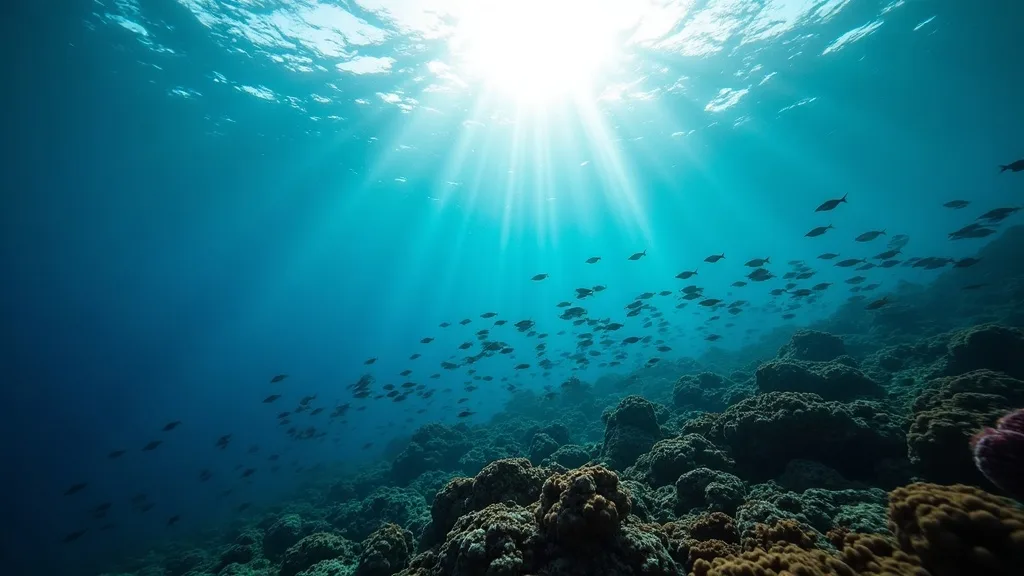
Coverage. Marine surveys of the Bird’s Head Seascape have documented more than 550 coral species across Raja Ampat — the richest coral province on the planet — and Melissa’s Garden is where that statistic becomes something you can see in a single sweep of the eye. The plateau is a continuous mosaic of hard corals in competition: plate corals stacked like terraced fields, thickets of staghorn, lettuce and cabbage formations folding over one another, all of it shallow enough to glow in natural light.
It is a photographer’s dive above all — wide-angle in the morning light, when the plateau turns gold. Divemasters who have worked the whole archipelago tend to name it their favourite reefscape, not for any single creature but for the sheer, unbroken health of the coral itself.
Melissa’s Garden is welcoming when timed well and lively when it is not. At slack water the plateau is calm, shallow and forgiving — comfortable for newly certified divers under guide supervision. When current runs across the reef, the dive becomes a gentle drift along the garden’s flanks, better suited to divers with some experience. The golden rule is buoyancy: the corals grow close to the surface, and fins must never touch them. Because so much of the reef sits in the top few metres, this is also one of the finest snorkel sites in the archipelago, making it a natural choice for mixed groups of divers and non-divers aboard the same yacht.
October to April is the prime season, with the calmest seas, the best visibility and the most reliable conditions for the crossing between the Dampier Strait and Fam. Raja Ampat dives year-round, and the low season offers empty sites and softer rates, but the October–April window is when the garden shows its best light. December to March is peak — expect a 10–20 percent premium and reserve 9 to 12 months ahead; 2027 departures are already filling fast. Rates verified August 2026.
Penemu sits squarely on the classic northern arc, so nearly every route that heads for Piaynemo and Wayag includes it.
| Itinerary | How Melissa’s Garden fits |
|---|---|
| Northern loop, 7 nights | The Penemu/Fam day links the Dampier Strait dives with Piaynemo and Wayag — garden in the morning, viewpoint in the afternoon |
| Combined north + Misool, 10–12 nights | Fam is the hinge between the northern sites and the southern leg to Misool |
| 7-day itinerary | Typically mid-voyage, once guests are dived-in and ready for the showpiece reef |
Compare all routes on the Raja Ampat itineraries hub, or start with the master guide to a Raja Ampat yacht charter and let the concierge desk shape the map around your group.
Exceptionally so. The richest coral sits shallow, in bright natural light, so snorkellers see much of what divers see. On our charters the tender runs divers and snorkellers to the site together, with a guide at the surface — one of the best shared days on any Raja Ampat itinerary.
Your guide will time the dive for slack water, when the plateau is calm. If flow picks up, the dive becomes an easy drift along the reef edge. Divers should be comfortable with buoyancy control — the coral is close to the surface and must never be touched.
Yes — that is the classic Fam day by private charter: the garden in the morning glass-off, lunch on board, then the Piaynemo karst viewpoint in the afternoon. It is routinely the day guests name as the trip’s finest.
Operated by Komodo Luxury since 2015, our Bali-based team plans Raja Ampat end to end — vessel selection, itinerary design, permits, dive guides and the tide-timed slots that make Melissa’s Garden sing. Tell us your dates and who is aboard, and we will build the route. WhatsApp +62 811-3810-8110 or email sales@komodoluxury.com — Plan my charter.
Have a Question on This Topic?
Our concierge team is in Sorong, on-island for most of the year. Forward this page along with your specific question — we will reply with an answer grounded in what we have actually seen on the water.