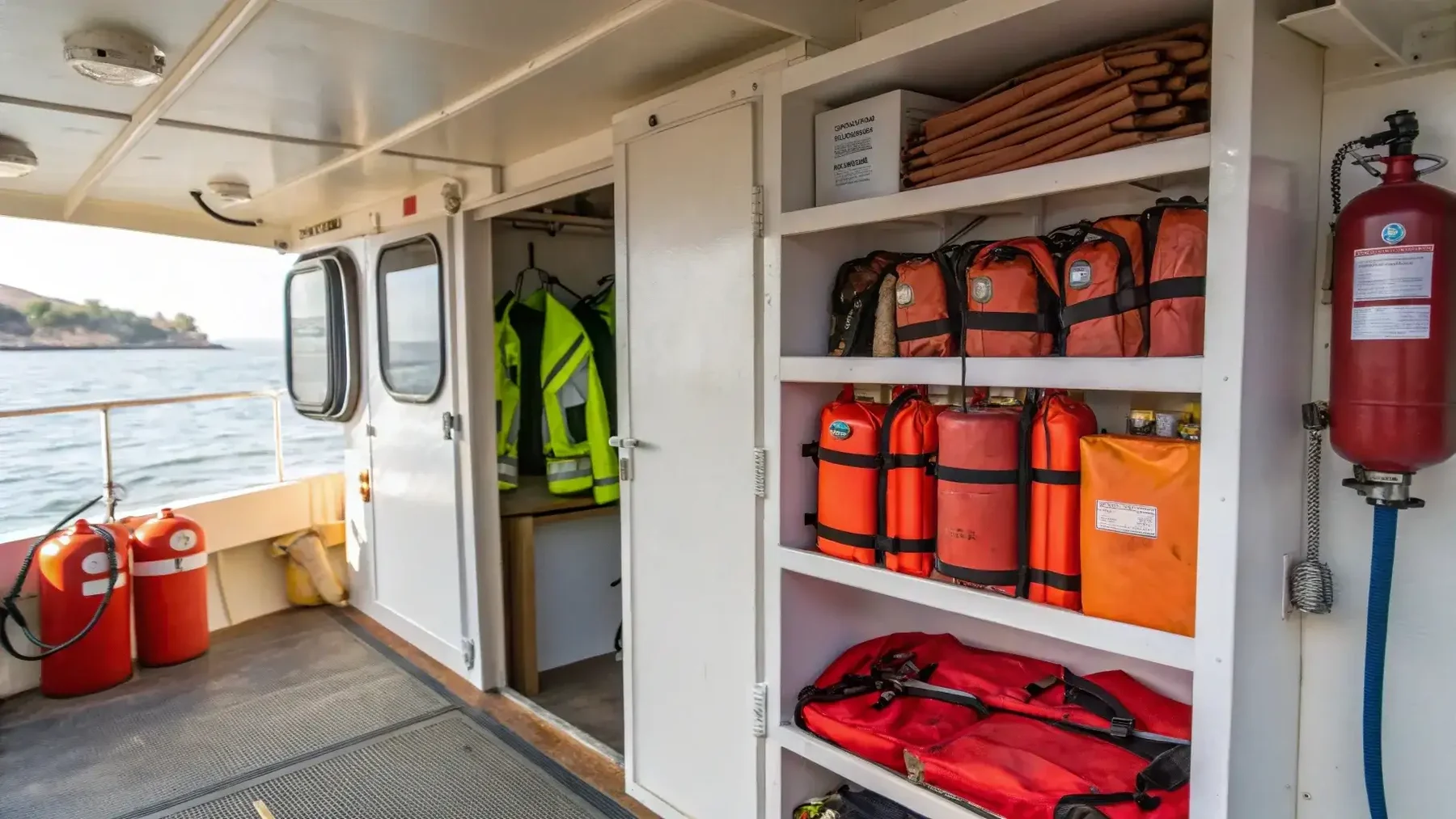

Yes — for charter guests, Raja Ampat is one of the calmest and most welcoming corners of Indonesia, and a crewed yacht is the safest way to experience it. The real considerations are practical rather than criminal: remoteness from medical care, strong currents at the famous dive sites, equatorial sun, and sea conditions that reward travelling in the right season with the right crew. Here is the honest picture our concierge desk gives every guest planning 2027.
Is Raja Ampat Safe to Visit in 2027?
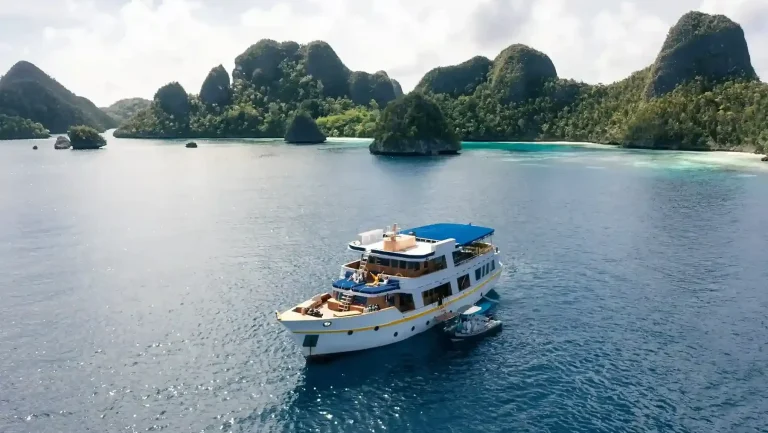
For visitors moving through the islands by boat, the answer from more than a decade of operations is a clear yes. Raja Ampat is a sparsely populated archipelago of small villages whose economy is increasingly built around marine tourism and conservation — communities here host visiting vessels routinely, and village stops such as Arborek are highlights of a charter precisely because the welcome is genuine. Petty crime of the kind that shadows busy tourist cities barely has a habitat here: you are, most of the time, anchored off an uninhabited limestone island with your crew.
The sensible caveats are the universal ones. Follow your crew’s guidance ashore, respect village customs — modest dress, ask before photographing people — and treat Sorong, the gateway city, like any working port city: unremarkable in daylight, best navigated with your arranged transfer rather than on foot with luggage. On our charters that transfer is standing procedure, not an option.
How Safe Are the Sea Conditions?
Season is the safety system. Raja Ampat’s prime charter window runs October to April, when conditions across the Dampier Strait and around Waigeo and Misool are at their most settled — it is no coincidence that the large expedition vessels position here for November–April and rotate toward Komodo for May–October. Cruising within that window, in a professionally crewed vessel, sea state is a comfort question far more often than a safety one.
What actually protects you is the crew’s local knowledge: captains who read the weather daily, adjust anchorages, and resequence an itinerary around a passing squall without the guests ever perceiving a decision was made. This is the structural difference between a managed charter and improvised boat travel — and it is why we match guests to vessels and captains, not just to price points. Browse the vetted options on our Raja Ampat charter fleet page; every vessel there operates with full professional crew.
Is Diving in Raja Ampat Safe?
Yes — with the respect the sites demand. Raja Ampat’s reefs are the richest ever surveyed, with scientific work across the Bird’s Head Seascape documenting over 1,700 fish species and more than 550 coral species, and that abundance is fed by moving water. Signature sites like Cape Kri and Blue Magic are current-swept by nature; Manta Sandy operates a supervised queue system so cleaning-station encounters stay orderly for both mantas and divers.
- Dive with the vessel’s guides and follow site briefings — current windows are planned around tide tables, not convenience
- Dive your certification and your recent experience, not your ambition; conditions are honest here
- Carry a computer, a surface marker buoy and, for current sites, a reef hook
- Keep profiles conservative — the nearest hyperbaric care is far away, and good operators plan as if that is true, because it is
- Carry dive insurance; our charter insurance guide covers exactly what the policy should say
Snorkellers inherit the easy end of the same spectrum: sheltered lagoons, house reefs and jetty snorkels where the current sites simply are not on the day’s plan.
What About Health and Medical Access?
This is the consideration that deserves the most planning, because it is the one geography imposes. Raja Ampat has village-level clinics; anything serious means returning to Sorong and likely flying onward. Three practical layers manage that reality:
- Before travel: see a travel-medicine doctor about tropical precautions for eastern Indonesia, carry personal medications in duplicate, and buy insurance with genuine remote-evacuation cover
- On board: professional crews maintain first-aid capability, communications and evacuation plans as standard operating procedure
- In planning: itineraries are built with the vessel’s position relative to Sorong in mind — remoteness is designed, not accidental
Equatorial basics matter more than exotic fears in practice: hydration, reef-safe sun protection, and covering up on deck do more for a Raja Ampat week than anything in a pharmacy.
Is Raja Ampat Safe for Families and Non-Divers?
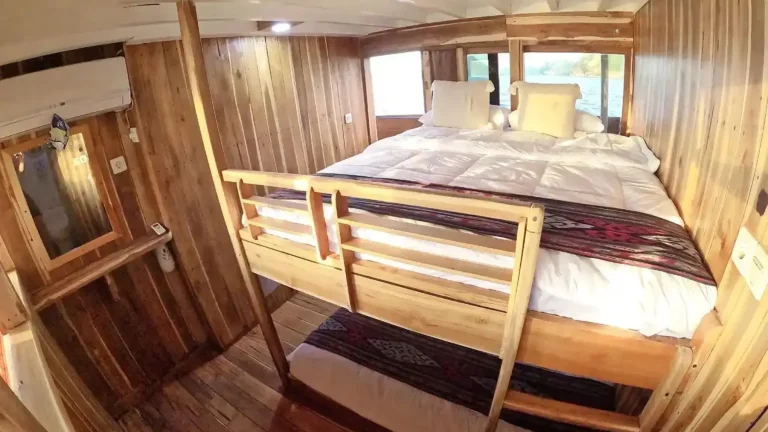
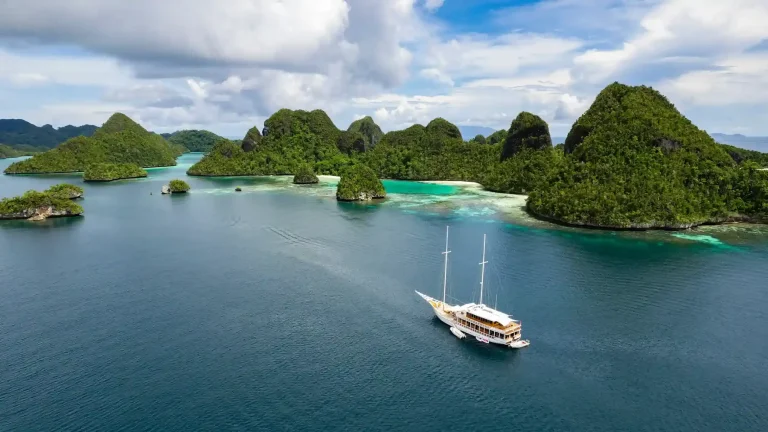
Very — with the right vessel. Families charter Raja Ampat every season, and children remember Piaynemo’s viewpoints, tender rides through Kabui Bay’s karst passages, and snorkelling from the swim platform long after the adults have stopped comparing dive logs. The safety variables for families are vessel choice and crew ratio: stable hulls, guarded deck spaces, and crews accustomed to young guests. Phinisi such as Amandira are perennial family favourites for exactly this blend of adventure and supervision — tell the desk the ages in your party and we will shortlist accordingly.
What Do Guests Worry About That They Shouldn’t?
Two things come up in almost every planning call. The first is headlines: news from mainland Papua occasionally reaches guests researching the region, and it deserves a clear answer — the Raja Ampat archipelago is a separate island regency, reached by sea, whose villages have built their economy around marine tourism and conservation, and the events that make international news happen in different places under different conditions. Charter operations have run through these islands season after season without that context touching a guest’s experience. The second is sharks: Raja Ampat’s healthy reefs mean you will see them, mostly blacktip and whitetip reef sharks and, if you are lucky, the harmless walking sharks the region is famous for — their presence is the signature of a functioning reef, not a hazard, and divers travel across the world hoping for exactly these encounters.
How Does a Crewed Charter Change the Risk Picture?
It converts almost every risk from something you manage into something the operation manages. Navigation, weather calls, dive supervision, village protocol, permits, provisioning, communications, evacuation planning — on a professionally run charter these sit with people who do them for a living, in waters they work every season. Across the Komodo Luxury network, operating since 2015, that system has carried more than 800 voyages through eastern Indonesia, and it is the honest answer to the safety question: Raja Ampat is safe the way a well-run expedition is safe — by design, preparation and crew, not by luck. Start with the master Raja Ampat yacht charter guide to see how a managed voyage is put together.
Ready to See Raja Ampat the Safe Way?
Tell our concierge team your dates, your party and your comfort level, and we will build a 2027 charter where every risk on this page already has an owner — the crew, the desk, the plan. WhatsApp +62 811-3810-8110 or email sales@komodoluxury.com and tell us: Plan my charter.