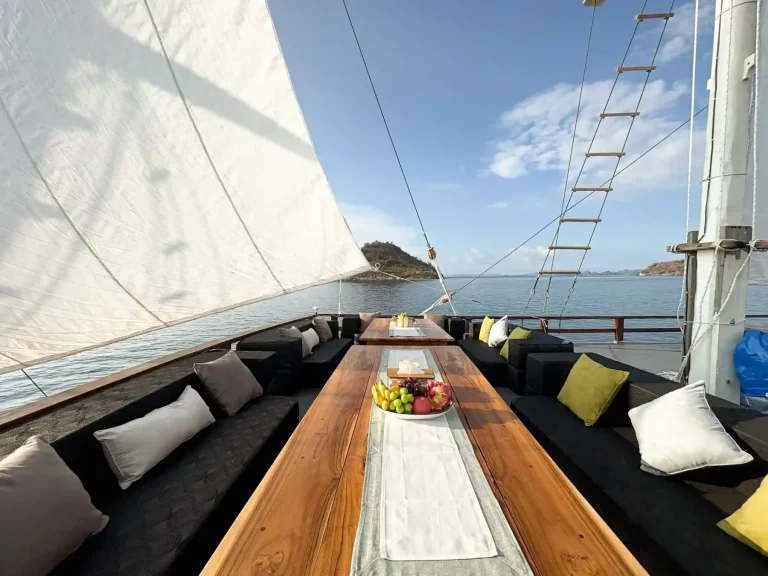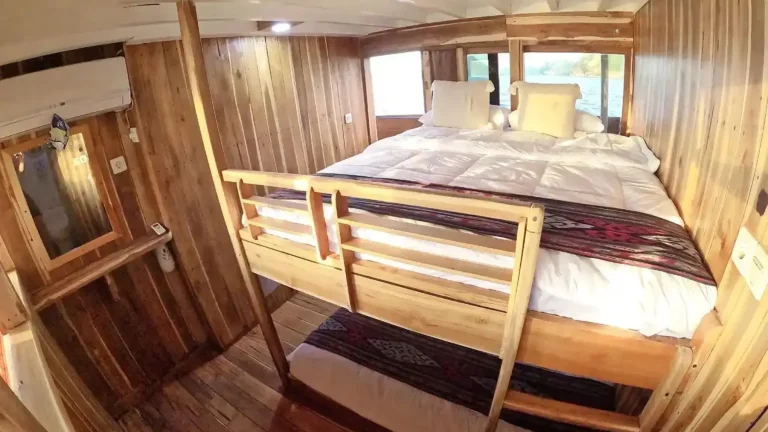


For divers, privacy-minded families and anyone who wants the world’s richest reefs on their own schedule, a Raja Ampat yacht charter is worth it — provided the budget matches the real numbers. Whole-vessel charters start around USD 1,500 per night for an entry phinisi and USD 4,500 per night for mid-luxury, with weekly rates spanning USD 21,000 to USD 700,000 plus expenses; per-cabin alternatives start near USD 350 per person per night. What you are really buying is not just a boat: it is routing, timing and planning — the three things that decide whether Raja Ampat delivers.
What Does a Raja Ampat Charter Actually Cost?
Rates verified August 2026. Whole-vessel nightly bands run from around USD 1,500 for a small entry phinisi through USD 4,500 for mid-luxury, USD 6,000–10,000 for premium phinisi, USD 12,000–16,000 for the flagship class and USD 15,000+ for ultra-luxury. In charter-market terms, weekly rates look like this:
| Vessel (example) | Weekly rate |
|---|---|
| Manta Mae (31m) | from USD 21,000 per week + expenses |
| Scubaspa Zen | from USD 81,900 per week + expenses |
| Vela | from USD 119,000 per week + expenses |
| Silolona | from USD 130,900 per week + expenses |
| Lamima | from USD 175,000 per week + expenses |
| Aqua Blu | from USD 388,000 per week + expenses |
On top sit the Raja Ampat Marine Park entry pass — currently around IDR 700,000–1,000,000 per person per year, confirmed at booking — cruising and village fees on larger charters, and a 10–20% premium on peak dates from December to March. The full arithmetic, including what is and is not included, lives on our charter cost guide.
What Do the Rates Include?
Charter rates in this market typically cover the vessel, full crew, private chef and dining aboard, with weekly market rates quoted “plus expenses” — fuel beyond the standard cruising allowance, park and village fees, premium beverages and the like billed separately. Inclusions vary meaningfully between vessels, so the honest move is to compare proposals line by line rather than headline numbers; that is precisely the comparison our desk prepares for you.
What Do You Get That a Resort or Shared Liveaboard Can’t Offer?
Three things, and they compound. First, timing: sites like Cape Kri and Blue Magic fish best at specific slack-tide windows, and a private vessel positions for them instead of queueing for them. Second, routing: your itinerary bends around your group — more Misool lagoon days for photographers, more Dampier Strait tanks for divers, a Wayag sunrise climb because you feel like it. Third, the household: a full crew and private chef, cabins that answer to your party alone, and a cruise director whose only brief is your week. Shared boats sell berths; a charter sells you the archipelago.
The numbers on the reef justify the effort: Bird’s Head Seascape research has documented 1,700+ fish species and 550+ coral species here, the richest reef system on record — and the marquee sites, from Melissa’s Garden to Magic Mountain, sit far enough apart that living aboard is the only way to string them together well.
How Does a Charter Compare With a Resort or Shared Liveaboard?
Think of it as three ways to buy the same water. A land resort gives you comfort and a house reef, but Raja Ampat’s greatest sites — Cape Kri, Blue Magic, the Misool lagoons, Wayag — are spread across serious distances, and day boats can only nibble at them. A shared liveaboard solves the geography (from around USD 350 per person per night) but sells you a fixed route, fixed dive schedule and a manifest of strangers. A private charter solves both: the geography of a liveaboard with the autonomy of a villa. Which one is “worth it” depends entirely on whether autonomy matters to your group — for a honeymoon, a three-generation family or a tight group of divers, it usually matters more than the spreadsheet suggests. Our Raja Ampat liveaboard overview maps the middle ground.
When Is a Private Charter NOT Worth It?
An honest assessment needs this section. A whole-vessel charter is the wrong tool if:
- You are a couple or solo traveller on a defined budget — a per-cabin charter from around USD 350 per person per night, or a packaged 9-day, 8-night Raja Ampat itinerary at USD 6,400 per person, delivers the same water for a fraction of the outlay.
- You only have four or five nights. Minimum charter lengths and the flights into Sorong make very short trips inefficient; Raja Ampat rewards seven nights and up.
- You need resort infrastructure — spa menus, kids’ clubs, medical rooms — more than you need wilderness. This is remote expedition cruising, however polished the vessel.
- Your dates are locked to May–September and your goal is peak conditions. The low season is quieter with softer rates, but the prime window is October to April.
How Do You Maximise the Value?
Book nine to twelve months ahead for peak season — 2027 calendars are filling fast — and be honest about vessel class: a superb entry or mid-luxury phinisi with a great dive team often beats a trophy yacht used timidly. Amortise the journey: combined north-plus-Misool routes of 10–12 nights spread the flights across more water, and our itinerary library shows how the weeks assemble. Fill the boat sensibly — a ten-guest phinisi at capacity transforms the per-person mathematics. And if your dates are flexible, ask about April–May and October–November repositioning windows.
One more lever: season selection. The October–April prime window delivers the calmest seas and best visibility, but the December–March heart of it carries the 10–20% premium. Groups chartering at the shoulders of the prime season get essentially the same archipelago at the friendlier end of the pricing — and quieter anchorages with it.
So, Is a Raja Ampat Yacht Charter Worth It?
If the budget bands above read as feasible rather than frightening, yes — emphatically. Raja Ampat is the destination that private charter was designed for: too spread out for day boats, too special for a fixed shared route. The network behind this desk — operated by Komodo Luxury since 2015, with 800+ voyages and guests from 45+ countries — exists because the format works: the right vessel, from an entry phinisi to Lamima, matched to the right route in the right month. That match, more than any single boat, is what the money buys. Come with clear expectations about budget and season, and Raja Ampat has a way of settling the “worth it” question by the second morning — usually somewhere between the first slack-tide dive and the first empty lagoon.
FAQ
How much does a week’s charter in Raja Ampat cost in total?
Whole-vessel weekly rates span USD 21,000 to USD 700,000 plus expenses depending on class, from a 31-metre entry vessel to a 70-metre superyacht. Mid-luxury vessels start around USD 4,500 per night. Rates verified August 2026.
Is there a cheaper way to see the same reefs?
Yes — per-cabin liveaboard berths from around USD 350 per person per night, or a packaged 9D8N Raja Ampat itinerary at USD 6,400 per person, cover the same marine park without the whole-vessel commitment.
Which months justify the investment best?
October to April, when seas are calm and visibility peaks; December to March is the heart of the season and carries a 10–20% premium.
Want the honest recommendation for your group and budget? Message WhatsApp +62 811-3810-8110 or email sales@komodoluxury.com — the concierge desk will tell you which class of vessel your week actually needs: plan my charter.