

Book nine to twelve months ahead for Raja Ampat’s October–April prime season — and at the very front of that window for Christmas, New Year and the December–March heart of the season, when demand peaks and rates carry a 10–20% premium. As of August 2026, 2027 calendars are already filling fast. Flexible travellers outside peak dates can often confirm on much shorter timelines.
Why Does Raja Ampat Book Out Earlier Than Other Destinations?
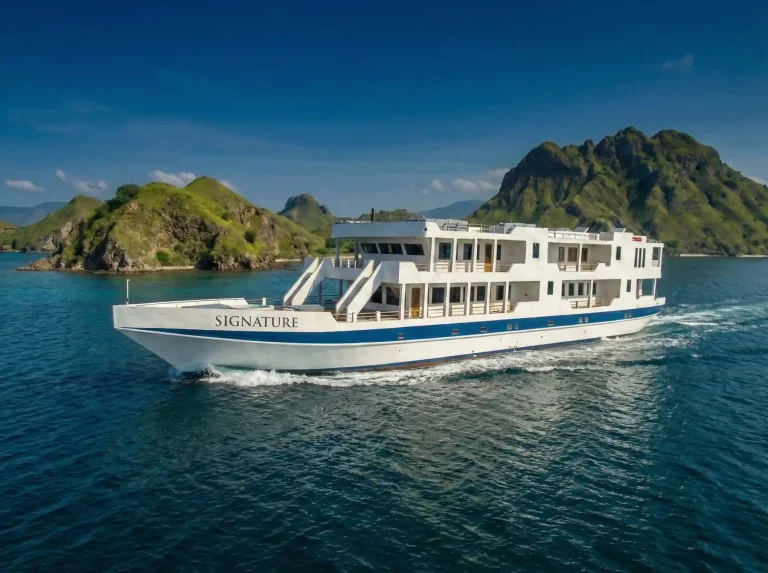
Two structural reasons. First, the fleet is finite: the partner network curated by Komodo Luxury runs nine owned vessels plus vetted partner vessels, and global demand for Raja Ampat comfortably exceeds the number of quality charter weeks available. Second — and this is the detail most first-time charterers miss — the larger expedition vessels only operate in Raja Ampat from November to April before rotating to Komodo for May to October. A flagship yacht therefore has perhaps a single season’s worth of Raja Ampat weeks to sell each year, and the festive fortnight sits inside it. Scarcity, not marketing, sets the timeline.
How Does the Vessel Rotation Shape Your Choice?
Understanding the rotation turns the booking calendar from a frustration into a strategy. Because the premium fleet migrates between Komodo and Raja Ampat, the crossings themselves happen in April–May and October–November — often as 10–14-night voyages through the Banda Sea — and the vessels that remain in Raja Ampat year-round tend to be the smaller, regionally-based phinisi. Practically, that means: if you want a specific flagship in Raja Ampat, your realistic window is November to April and you are competing with every other group who wants the same months; if you want Raja Ampat itself and are relaxed about the hull, the calendar is far kinder. Knowing which of those two travellers you are is the single most useful thing to tell the desk in your first message.
What Is the Right Booking Timeline for Each Season?
Verified August 2026:
| Travel window | Recommended lead time |
|---|---|
| Christmas / New Year | The full 12 months — first pick of vessels goes earliest, premiums of 10–20% apply |
| Peak season (October–April) | 9–12 months for preferred vessel and dates |
| Low season (May–September) | Shorter windows workable; quieter, with softer rates |
| Repositioning crossings (Apr–May, Oct–Nov) | Opportunistic — ask the desk what is sailing |
Season strategy matters as much as lead time; our best time to visit guide breaks down conditions month by month.
What Does Booking Early Actually Get You?
Early booking is not just anxiety management — it changes what your money buys at every level of the trip:
- Vessel choice across the whole spectrum — entry phinisi from around USD 1,500 per night, mid-luxury from USD 4,500, premium phinisi at USD 6,000–10,000, flagship class at USD 12,000–16,000 and ultra options beyond USD 15,000. The best boats in each band confirm first; browse the fleet early.
- Rate protection — confirming locks your rate against later seasonal pressure.
- Itinerary quality — combined north-plus-Misool routes of 10–12 nights need the calendar space that early bookings enjoy.
- Better flights — Sorong (SOQ) connects via Jakarta (around four hours), Makassar and Manado, with Bali via transit; booking early keeps the sensible connections.
- Embarkation options — Sorong harbour is standard, but Waisai and southern Misool starts can be arranged when planned ahead.
Do Flights and Ground Logistics Need the Same Lead Time?
No — and this reassures many planners. The charter is the scarce asset; everything around it assembles on a normal travel timeline. Domestic connections into Sorong operate daily, hotel nights in Sorong or Bali before embarkation are straightforward, and the marine park entry pass is processed as part of pre-departure planning rather than by you at a counter. The practical sequencing is simple: lock the vessel and dates first, then build flights around them a few months out. Groups often invert this — holding flights while shopping for boats — and lose the better vessel while they deliberate. In Raja Ampat, the boat is the booking; the rest is administration our team handles anyway.
What Happens If You’re Already Late?
Not all is lost. Cancellation gap weeks, orphan weeks between confirmed charters and the April–May and October–November repositioning legs all surface through the year, and low-season months stay genuinely open. We keep a note of flexible travellers and match them when calendars move — the mechanics are covered in our guide to last-minute Raja Ampat availability. The honest rule: late booking narrows choice long before it removes possibility. What late bookers lose first is not the destination but the specifics — the named vessel, the exact cabin configuration, the ideal embarkation day — and what they keep is the archipelago, which is the part that matters.
How Does Booking Work Once You Commit?
The sequence is simple: inquiry, tailored proposal, contract and deposit, then pre-departure planning. From there the concierge desk — operated by Komodo Luxury since 2015, with 800+ voyages across the network — handles the machinery: marine park entry passes (currently around IDR 700,000–1,000,000 per person per year, confirmed at booking), cruising and village fees on larger charters, provisioning, dive planning and airport transfers in Sorong. Your side of the work is mostly conversation: who is coming, what the group loves, how hard you want to dive. The financial picture — deposits, inclusions, expenses — is laid out plainly on our charter cost guide.
Does Booking Early Change the Experience Itself?
Noticeably. Early confirmation buys planning depth: the cruise director can build your route around slack tides at Cape Kri and Blue Magic, reserve the quiet Misool anchorages for the nights you want them, schedule Manta Sandy for the etiquette-managed windows and thread in Piaynemo and Wayag when light is best. Groups that confirm late still get Raja Ampat — the reefs do not diminish — but the margin for craftsmanship narrows. In a destination this remote, the itinerary is the luxury, and itineraries are built in the months before you fly. Early bookers also get first refusal when something better opens — an upgraded vessel, an extended route, a preferred chef — because the desk knows exactly who is confirmed and what they wished for.
FAQ
How far in advance should I book for peak season?
Nine to twelve months for October–April departures — and the full twelve for Christmas and New Year, when the fleet’s best weeks confirm first. 2027 calendars are filling fast as of August 2026.
Can I still charter if I’m only a few months out?
Often, yes — through cancellation gaps, repositioning legs and low-season windows. Flexibility on dates and vessel class is what makes it work.
Do prices rise if I book late?
Late bookers face the seasonal reality: December–March dates carry a 10–20% premium and the remaining choice narrows. Booking early protects both rate and selection.
Should I book the charter or my flights first?
The charter, always. Vessels are the scarce resource; daily connections into Sorong via Jakarta, Makassar and Manado assemble easily once your dates are fixed, and our desk coordinates arrival timing with embarkation.
Tell us your target month, group size and preferred vessel class, and we will tell you honestly how much booking runway you actually need. Message WhatsApp +62 811-3810-8110 or email sales@komodoluxury.com: plan my charter.