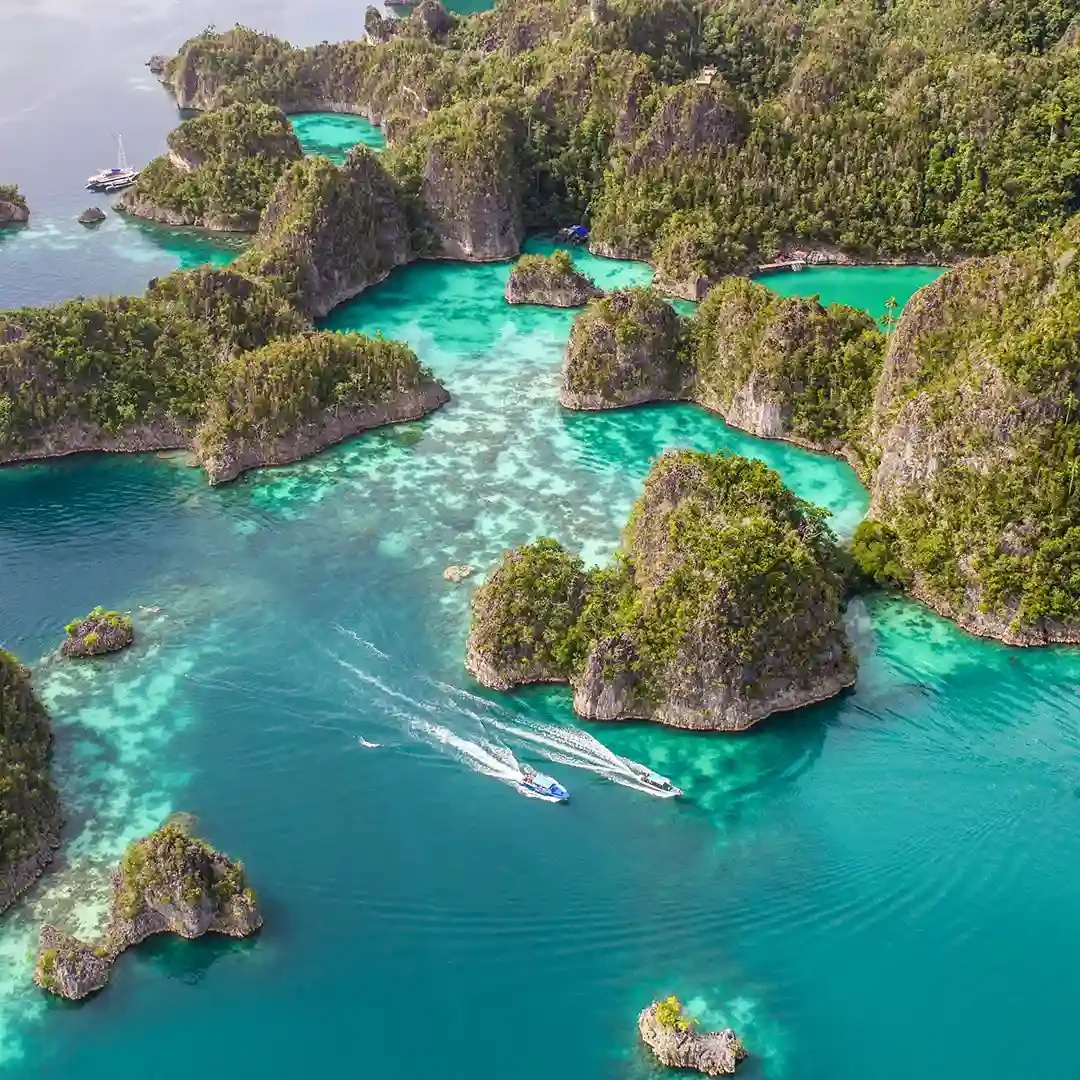

A Raja Ampat photography charter is best scheduled between October and April, when calm seas, peak underwater visibility and manta activity align across the archipelago. For 2027 departures the working rule is simple: book nine to twelve months ahead, brief the crew on the exact shots you want, and let a private yacht position you at the karst viewpoints and cleaning stations at first light, before day boats arrive. This guide covers timing, locations, vessel choice and realistic budgets, with rates verified August 2026.
Why Is Raja Ampat Such a Strong Photography Destination?
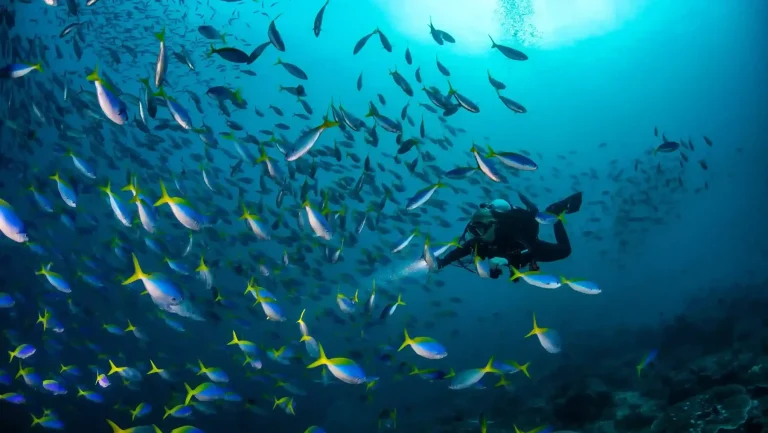
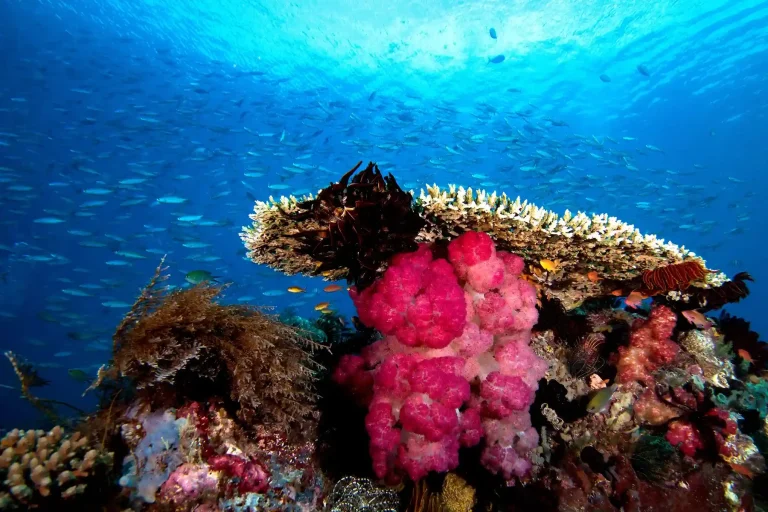
Scientific surveys of the Bird’s Head Seascape have recorded more than 1,700 fish species and over 550 species of hard coral in these waters — among the highest marine biodiversity ever documented. For an underwater photographer, that translates into reef scenes with genuine density: schooling trevally and barracuda at Cape Kri, oceanic mantas at Blue Magic, soft-coral walls in Misool and hard-coral gardens at Melissa’s Garden that fill a wide-angle frame edge to edge.
Above the waterline, the archipelago delivers a second portfolio entirely. The cone karst of Piaynemo and the lagoon maze of Wayag are the images most people associate with Raja Ampat, and both reward photographers who arrive early, stay late and shoot from the water as well as the ridgelines. A private charter is the only practical way to control all three variables — timing, angle and light — in a region where the nearest airport is a day’s sail from the best subjects.
When Should You Time a 2027 Photography Charter?
The prime window runs October through April, when seas are calmest and visibility is at its best; the region remains navigable year-round, but the shoulder months trade some conditions for quieter anchorages and softer rates. Here is how the 2027 calendar breaks down for photographers. Rates and season notes verified August 2026.
| Window | Conditions | Photographic focus |
|---|---|---|
| October–November 2027 | Season opening, calm seas, fewer vessels | Manta cleaning stations waking up in the Dampier Strait; uncrowded Piaynemo viewpoints |
| December 2027 – March 2028 | Peak season; expect a 10–20% premium over standard rates | Best all-round visibility; schooling fish action at Cape Kri and Sardine Reef; reliable manta encounters |
| April 2027 or 2028 | Season close; larger yachts begin repositioning toward Komodo | Quiet reefs, crossing voyages via the Banda Sea for open-ocean and island imagery |
| July–October (extension) | Cenderawasih Bay window via Manokwari or Nabire | Whale shark photography at the Kwatisore aggregation |
Which Locations Deliver the Signature Shots?
Most photography charters build their route around a handful of proven subjects, then leave slack in the schedule for weather and light. These are the anchors our concierge team plans around:
- Wayag — the classic lagoon-and-karst panorama; climb the ridge for sunrise, then shoot the turquoise channels from the tender at midday.
- Piaynemo — the most photographed viewpoint in Raja Ampat; a private yacht anchored nearby lets you summit before the day-trip fleet from Waisai arrives.
- Manta Sandy and Manta Ridge — cleaning stations with a strict queuing etiquette; patient photographers who hold position are rewarded with close, repeated passes.
- Cape Kri and Sardine Reef — current-swept slopes where the fish schools are dense enough to become the composition itself.
- Blue Magic — the Dampier Strait seamount known for oceanic mantas and pelagic action in blue water.
- Melissa’s Garden — a pristine hard-coral plateau in the Fam group, ideal for wide-angle reefscapes in shallow, bright water.
- The Passage — the narrow river-like channel between Waigeo and Gam, shot best from a slow-moving tender in soft afternoon light.
- Arborek jetty — a photogenic village pier over clear shallows, good for split-shots and drone frames.
What Should You Look For in a Photography Yacht?
Almost any vessel in the region can carry a camera; far fewer are set up to serve one. When we match photographers to boats from our partner fleet, we check five things:
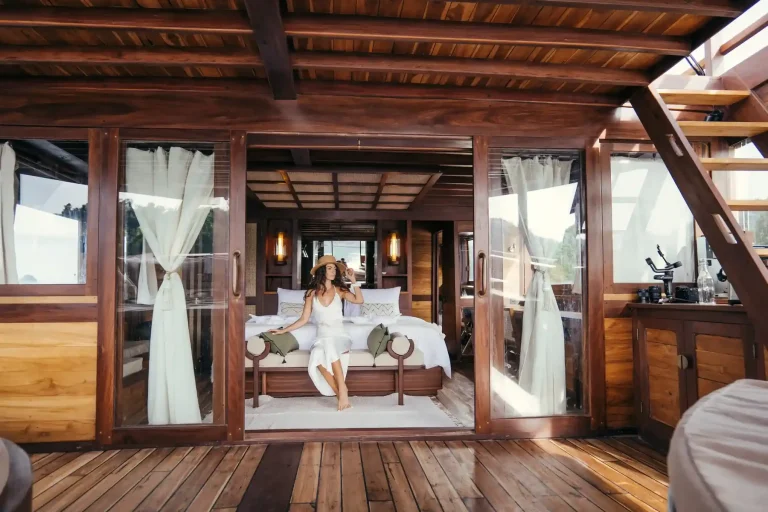
- A stable platform with dedicated tenders, so you can chase angles and drone launches without moving the mother ship — expedition vessels such as Kudanil Explorer were built for exactly this kind of work.
- Charging capacity and workspace: enough outlets, a dry indoor table for editing and battery rotation, and crew who understand that housings and drones are not luggage.
- Freshwater rinse arrangements for housings and ports after every dive.
- An unhurried itinerary — the difference between a good manta frame and a great one is usually a second or third visit to the same site at a better hour.
- Dive guides who know the sites well enough to put you up-current of the action before it happens.
What Camera Setup Should You Bring in 2027?
Bring everything, because you can buy nothing. Sorong has no rental houses, no housing spares and no reliable repair options, so a Raja Ampat photography charter runs entirely on what you carry through the airport. Underwater, the destination rewards both ends of the bag: a wide-angle or fisheye setup for the reefscapes, mantas and schooling fish that define the region, and a macro rig for pygmy seahorses, nudibranchs and the muck life that fills surface intervals. Topside, a mid-range zoom covers viewpoints and village scenes, a long lens earns its weight on bird-of-paradise excursions, and a polarising filter transforms the lagoon shots.
Redundancy is the real packing principle. Duplicate O-rings, sync cords, strobe batteries and memory cards weigh little; a failed housing seal with no spare ends the underwater portfolio ten days early. Most vessels can dedicate a shaded indoor surface as a camera station on request — ask us to confirm this when shortlisting boats, along with 220V charging capacity for lithium batteries and any airline restrictions on your Sorong connection.
What Are the Rules for Drone Photography in Raja Ampat?
Drones are widely flown in Raja Ampat, but the marine park and local villages expect discipline: seek permission before flying over settlements, keep well clear of bird-of-paradise habitat and other wildlife, and never launch or land near manta aggregations. Regulations and local expectations evolve, so have our concierge desk confirm the current requirements for your specific 2027 route and any permits your operator must hold — this is part of the standard pre-departure briefing we run for every photography charter.
How Much Does a 2027 Photography Charter Cost?
Photography charters price the same as any private charter — you are paying for the vessel, not the camera. Rates verified August 2026:
- Mid-luxury whole-vessel charters from around $4,500 per night.
- Premium phinisi from $6,000–10,000 per night.
- Flagship vessels in the Lamima and Prana class from $12,000–16,000 per night.
- Per-person liveaboard berths from around $350 per night for photographers travelling solo or as a pair.
- Peak-season departures (December–March) carry a 10–20% premium, and the marine park entry fee — currently around IDR 700,000–1,000,000 per person, verified at booking — applies to every guest.
For a full rate breakdown by vessel class, see our Raja Ampat yacht charter prices for 2027, and browse our itinerary library to see how the northern loop, Misool and combined routes sequence these locations.
Plan Your 2027 Photography Charter
Our concierge desk — operated by Komodo Luxury since 2015 — plans photography charters end to end from Bali: the right vessel, an itinerary built around light and tide, Sorong airport transfers, permits and dive guides who understand what a photographer needs. Tell us the images you want to bring home and we will build the route backwards from there. WhatsApp +62 811-3810-8110 or email sales@komodoluxury.com — plan my charter.