Manta Sandy and Manta Ridge dive guide: cleaning-station etiquette, currents, best season, and how to visit by private yacht charter. Verified August 2026.
Manta Sandy is Raja Ampat’s most famous manta ray cleaning station — a shallow sandy amphitheatre in the Dampier Strait where reef mantas queue over coral heads while cleaner wrasse work their skin and gills. Together with the stronger, current-swept Manta Ridge nearby, it delivers the most reliable manta encounters on any Raja Ampat yacht charter, and a strict queue etiquette keeps it that way. Here is how the site works, how to dive it responsibly, and how our concierge desk builds it into a private charter itinerary.
Manta Sandy sits in the Dampier Strait, close to Arborek village and the Mansuar island group — the beating heart of northern Raja Ampat diving. From Sorong harbour, the main embarkation point for a Raja Ampat yacht charter, the run to the Arborek area is roughly 53 nautical miles, about 8 hours of cruising, which most itineraries cover as an overnight passage so guests wake up on site.
By private yacht the logistics are simple: your vessel anchors in the Dampier Strait near Arborek, and the dive tender delivers you to the site in minutes. Your cruise director coordinates with the local ranger post that oversees the cleaning station, secures your group’s slot, and times the dive around tide and traffic — one of the quiet advantages of a private charter over a scheduled liveaboard: you dive when conditions are best, not when the timetable says so. Pair the dive with a visit to Arborek village — its jetty is a superb snorkel in its own right.
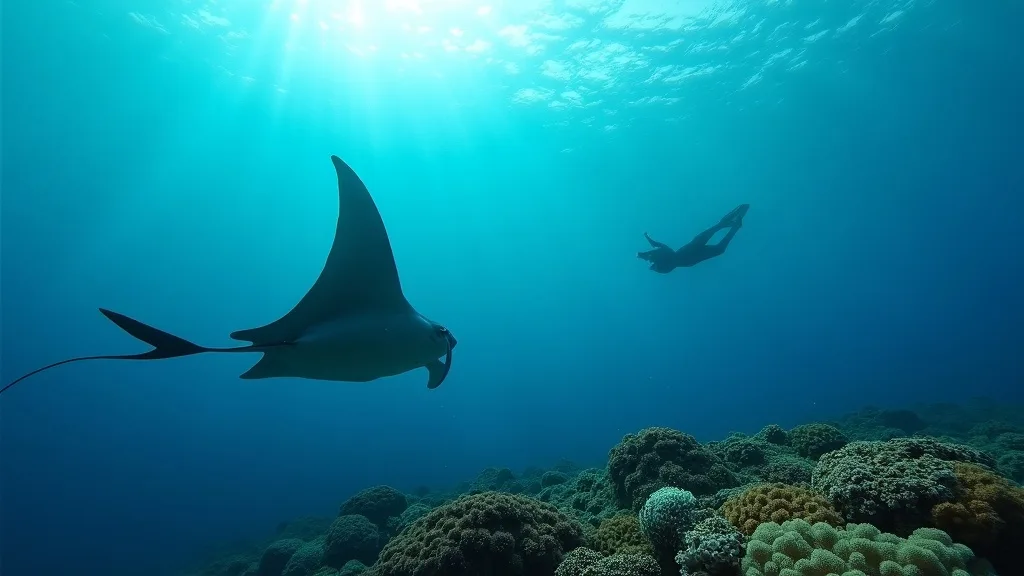
The headline act is the reef manta ray. At Manta Sandy, divers settle low behind a demarcation line of coral rubble and watch mantas glide in circuits over the cleaning bommies — sometimes one animal, sometimes a slow-motion procession. Encounters can last most of the dive, because the mantas are here to be cleaned, not to pass through.
This is one thread of the wider tapestry documented by marine surveys of the Bird’s Head Seascape — more than 1,700 fish species and 550-plus coral species — that makes Raja Ampat diving the most biodiverse on Earth. For the full picture of where and when to find the rays, see our guide to manta rays in Raja Ampat.
Manta Sandy operates on a simple code, monitored from the ranger post nearby, and your dive guide will brief it before every drop. The etiquette exists because mantas abandon cleaning stations that feel harassed — respect the code and the site keeps producing world-class encounters.
Manta Sandy itself is one of the friendliest dives in the Dampier Strait: a shallow, sheltered sandy bowl where you kneel or hover in place, well suited to newly certified divers when timed sensibly. Manta Ridge is a different proposition — current sweeps the ridge, and divers typically hold position while the mantas play in the flow. Guides reserve it for divers comfortable in moving water. Snorkellers are not left out: from the tender, with a guide, mantas are frequently visible from the surface — one reason the area features so often in Raja Ampat snorkeling plans. Divers still building confidence can schedule a refresher aboard before the first drop.
The prime Raja Ampat charter season runs October to April, when seas are calmest and visibility is at its best — and it is when manta activity at the Dampier Strait cleaning stations is at its most dependable. Raja Ampat operates year-round, and low season brings quieter sites with softer rates, but most guests plan around the October–April window. December to March is peak; expect a 10–20 percent seasonal premium and book 9 to 12 months ahead for holiday dates, as 2027 charters are already filling fast.
Almost every northern route we plan touches the Dampier Strait, so Manta Sandy fits naturally into the classic loops.
| Itinerary | How Manta Sandy fits |
|---|---|
| Northern loop, 7 nights | Core stop — Arborek, Manta Sandy/Manta Ridge, Cape Kri and Blue Magic in one arc before Piaynemo and Wayag |
| Combined north + Misool, 10–12 nights | Dampier Strait days bookend the southern leg to Misool |
| 7-day itinerary | Manta Sandy usually lands on day two or three, after the overnight from Sorong |
Browse all routes on our Raja Ampat itineraries hub, or start from the fleet side with a dedicated Raja Ampat dive liveaboard built around sites like this one.
The queuing rule at Manta Sandy is part of a wider code that keeps these sites viable; the rest of it, including reef contact, anchoring and village fees, is on our sustainability page.
Yes. Mantas at the cleaning station are often visible from the surface, and a guided snorkel from your yacht’s tender is a standard option for non-divers on our charters. The same etiquette applies: keep distance, stay quiet at the surface, and let the animals move freely.
Not for Manta Sandy — it is shallow and sheltered, and suitable for certified beginners with a guide. Manta Ridge is best for divers comfortable in current. Your cruise director will match each guest to the right site and timing.
Rates verified August 2026: entry-level phinisi start from around $1,500 per night whole-boat, mid-luxury vessels from about $4,500 per night, premium phinisi $6,000–10,000 per night, and shared liveaboard berths from roughly $350 per night per person. Every northern-route charter we plan can include Manta Sandy at no extra routing cost — it sits on the main Dampier Strait line.
Since 2015, the Komodo Luxury team behind this site has planned Raja Ampat charters end to end from Bali — the right vessel, the right itinerary, ranger coordination at Manta Sandy, permits, and dive guides who know the tide windows. Tell us your dates and we will build the route around the mantas. WhatsApp +62 811-3810-8110 or email sales@komodoluxury.com — Plan my charter.
Have a Question on This Topic?
Our concierge team is in Sorong, on-island for most of the year. Forward this page along with your specific question — we will reply with an answer grounded in what we have actually seen on the water.