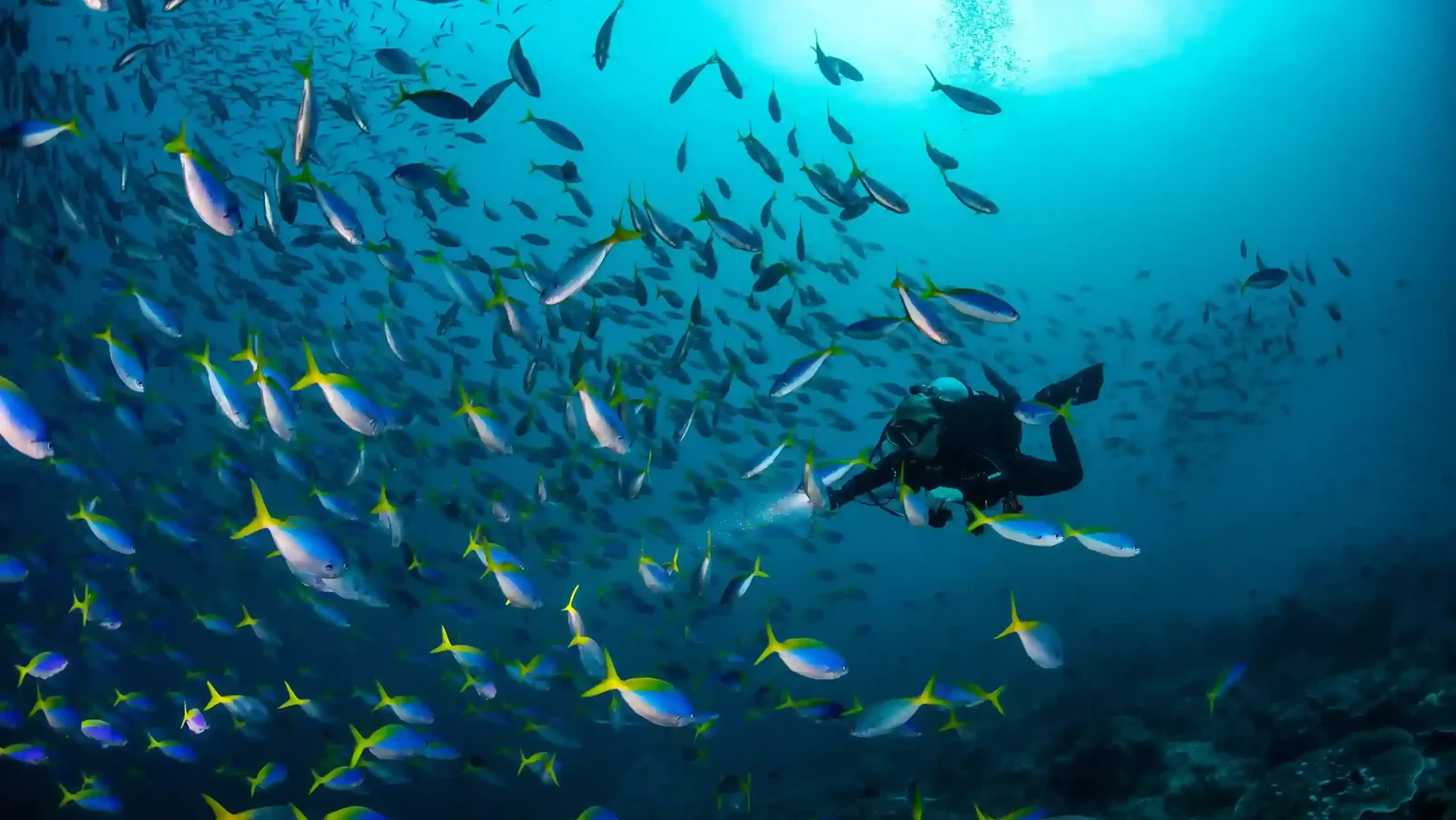

Night diving in Raja Ampat from a liveaboard is the easiest way to meet the reef’s second shift: walking sharks, hunting crustaceans and clouds of bioluminescent plankton on sheltered slopes just a short tender ride from your cabin. Dive-focused charters run night dives throughout the October–April prime season, usually as a guided dive after sunset, and an Advanced Open Water certificate — or an Open Water certificate with a guided night orientation — is all you need to join.
Why Is Raja Ampat So Special After Dark?
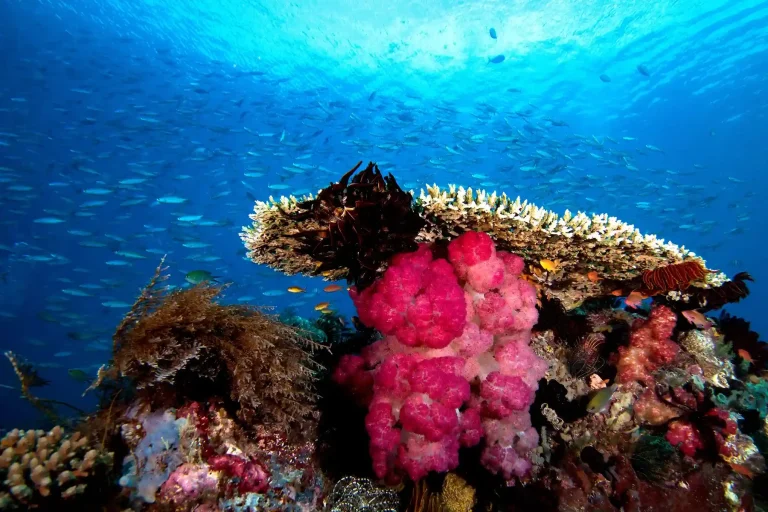
Raja Ampat sits at the centre of the Coral Triangle, and scientific surveys of the Bird’s Head Seascape have documented more than 1,700 fish species and 550 coral species here — the richest reef system ever recorded. When the sun drops, an almost entirely different cast takes over. The epaulette shark, the famous “walking” shark of West Papua, leaves its daytime crevice to stalk the reef flats on its fins. Torches pick out decorator crabs, bobtail squid, sleeping parrotfish sealed in their mucus cocoons and Spanish dancer nudibranchs unfurling into open water.
Then there is the light itself. Switch your torch off for a moment, wave a hand, and the water sparks with bioluminescent plankton — an experience that regularly outranks the day’s manta encounters in guests’ trip debriefs. Because your liveaboard anchors directly over or beside the site, all of this happens within minutes of the dive deck, not after a long night crossing in a speedboat.
Where Do Night Dives Happen on a Charter?
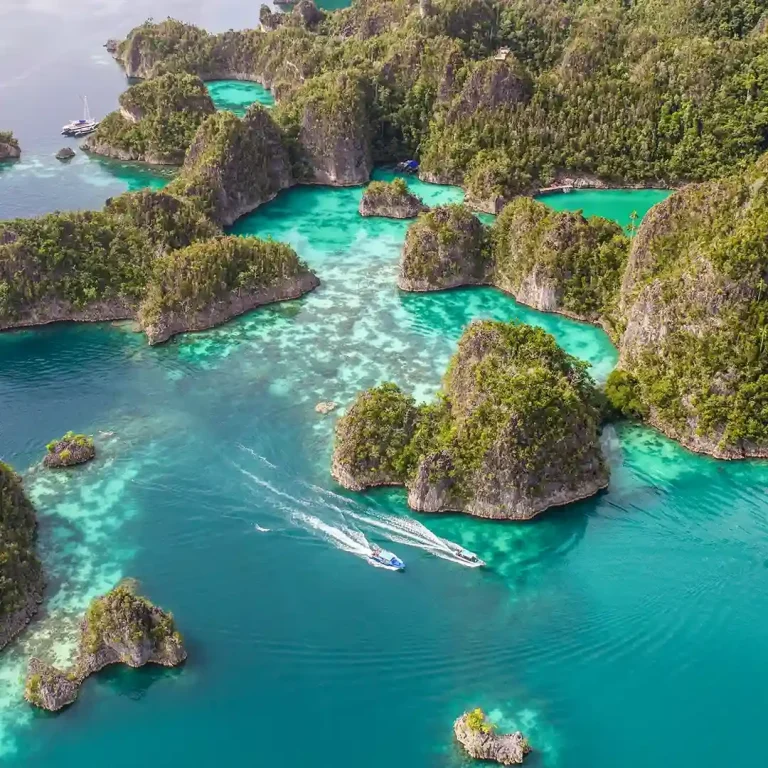
Your cruise director chooses night sites for shelter, not drama. The current-swept signature dives — Cape Kri, Blue Magic, Sardine Reef — are saved for daylight slack windows, while night dives favour calm anchorages: the jetty and house-reef slopes around Arborek in the Dampier Strait, protected corners near Kri and Gam, and the lagoon anchorages of the Penemu and Fam group on a northern itinerary. On a southern route, the enclosed karst lagoons of Misool offer some of the calmest night diving in Indonesia.
This is where a private charter earns its keep: because the boat answers to your group alone, the schedule can flex — an extra night dive when conditions are perfect, or a quiet evening on deck when they are not. See our Raja Ampat dive liveaboard page for how dive-focused vessels are set up.
What Will You Actually See on a Raja Ampat Night Dive?
Expect a macro-and-behaviour dive rather than a big-animal dive, and expect it to be dense. Hard coral heads that read as scenery by day resolve into hunting grounds by night: lionfish shadowing your torch beam to ambush baitfish, moray eels free-swimming between bommies, hermit and decorator crabs on every surface, and cuttlefish flushing colour as they stalk the shallows. The star remains the epaulette shark — small, calm and utterly unbothered by divers — walking across the flats on its pectoral fins. Photographers tend to burn an entire battery in the first half of the dive; subjects sit still, colours fire under artificial light, and the black backdrop does the composition for you.
What Certification and Experience Do You Need?
Most operators ask for an Advanced Open Water certification, which includes night-diving training, or an Open Water certification plus a guided night adventure dive with the onboard instructor. Beyond the card, what matters is comfort: easy buoyancy control, calm torch handling and disciplined buddy contact. Guides brief every night dive in detail — site layout, entry and exit, light signals and maximum depth — and groups are kept small and close. If you are new to diving altogether, start with our guide to learning to dive in Raja Ampat; several partner vessels can run courses during a charter.
What Gear Should You Bring or Confirm?
- Primary dive torch plus a compact backup — most liveaboards carry rentals, but confirm quantities for your group at booking.
- A tank marker light or chemical glow stick so your guide can identify divers at a glance.
- A reviewed set of light signals: circling for attention, slow sweep for “okay”, never a beam to the eyes.
- Full-length exposure protection — the water is tropical-warm, but repeat dives and evening breezes reward a proper suit.
- For photographers: a focus light and strobe or video light; night subjects in Raja Ampat sit still far longer than daytime pelagics.
How Does a Night Dive Actually Run From a Liveaboard?
Sunset near the equator lands at roughly the same time all year, so the rhythm is predictable. The briefing happens at dusk, the tender drops you at the site shortly after dark, and the dive itself is unhurried — night dives are shallow, slow and long on detail. You surface to a lit boat, warm towels and dinner service. On dive-focused itineraries, night dives typically slot in every second or third evening around the headline daytime sites, and your cruise director will trade them against sunset landings at Piaynemo or village visits according to the group’s appetite.
When Is the Best Season for Night Diving?
The prime charter season runs October to April, when seas are calm and visibility peaks; this is also the window when the larger expedition vessels rotate into Raja Ampat from Komodo (most operate here November through April). Raja Ampat can be dived year-round — the low season is quieter, with softer rates — but night diving specifically rewards the settled anchorages of the prime months. Daytime manta encounters at the Dampier Strait cleaning stations such as Manta Sandy make the perfect pairing; see our manta rays in Raja Ampat guide for that side of the story. If your dates fall outside the prime months, ask about which vessels remain in the archipelago — several smaller phinisi dive Raja Ampat all year.
What Does a Dive Liveaboard Charter Cost?
Rates verified August 2026. Night dives are generally offered within the dive programme on dive-focused vessels; confirm inclusion and any equipment rental when you book.
| Charter style | Indicative rate |
|---|---|
| Per-cabin dive liveaboard | from ~USD 350 per person per night |
| Entry phinisi, whole boat | from ~USD 1,500 per night |
| Mid-luxury whole vessel | from ~USD 4,500 per night |
| Premium phinisi | USD 6,000–10,000 per night |
| Flagship class (Lamima / Prana) | USD 12,000–16,000 per night |
Every guest also needs the Raja Ampat Marine Park entry pass — currently around IDR 700,000–1,000,000 per person per year, confirmed at booking — and peak dates from December to March carry a 10–20% seasonal premium. Full pricing context is on our charter cost guide.
FAQ
What is the best time for night diving in Raja Ampat?
October to April, when anchorages are settled and visibility is at its best. Raja Ampat remains diveable year-round, with quieter conditions and softer rates in low season.
What qualifications do I need for night diving?
An Advanced Open Water certification, or an Open Water certification with a guided night adventure dive led by the onboard instructor.
Are night dives included in the charter rate?
On dive-focused vessels they are usually part of the dive programme; on luxury cruisers they run on request. Confirm inclusions, guide ratios and rental gear at booking.
Ready to plan your after-dark Raja Ampat? Our concierge desk — operated by Komodo Luxury since 2015 — will match you to the right dive vessel, itinerary and season. Message WhatsApp +62 811-3810-8110 or email sales@komodoluxury.com and tell us your dates: plan my charter.