Raja Ampat charter safety and crew: which vessel certificates to ask for, real crew-to-guest ratios, dive guide standards, and evacuation realities.
Every vessel we place guests on must be able to produce, on request, its Indonesian registration, a valid safety certificate, port clearance for the voyage, and current hull and passenger liability insurance — plus crew certification and, for dive charters, the qualifications of the guides in the water with you. We are a charter desk, not the owner of every yacht in the fleet, so we do not publish certificate numbers for boats we do not own; we request the current documents from the owner for your dates and pass them to you before you pay. If an operator will not produce that paperwork, that is the answer to your question.
Raja Ampat Yacht Charter is operated by Komodo Luxury, part of Juara Holding Group (established 2015), coordinating a partner a fleet of nine owned-and-operated vessels plus chartered vetted partner vessels across the network. Below: what documents exist, what we check, what the crew numbers look like, and what happens in a real emergency 50-plus nautical miles from the nearest airstrip.
Yes — for the specific vessel and dates you are booking. Indonesian commercial passenger vessels operate under a documented regime, and a legitimate charter yacht holds current versions of the following. Ask for them by name; reassurance is not a certificate.
Two honest caveats. Document sets vary by vessel size and flag — a foreign-flagged motor yacht cruising Indonesia on a temporary import arrangement is not papered identically to a locally built phinisi. And we verify what the owner supplies; we do not audit a shipyard. Where a claim cannot be evidenced, we say so rather than dress it up — the same standard set out on our methodology page.
Our checks run in a fixed order, and a failure at any stage stops the placement. We confirm the vessel is genuinely positioned in Raja Ampat for your dates rather than mid-repositioning from Komodo; we request the document set above; we ask for recent photographs and the last refit date rather than brochure images; and we confirm the crew roster and dive-guide count for that departure, because rosters change between charters. Where we have placed guests on the same boat before, we weight that experience heavily. Where we have not, we say so.
This matters more here than in most cruising grounds. The fleet is seasonal — larger phinisi work Raja Ampat roughly November to April and rotate to Komodo May to October — so vessels and crews shift between seasons. A certificate you saw last year is not evidence about this year.
You should be given the captain’s name, his experience in eastern Indonesian waters specifically, and the crew count for your departure before you sign. The number to understand is crew-to-guest ratio, and on larger vessels here it is unusually high — the consequence of running a hotel, a dive centre and a ship at once with no resupply nearby.
| Vessel | Length | Guests | Crew |
|---|---|---|---|
| Aqua Blu | 60.4 m | 30 | 25 |
| Lamima | 65.2 m | 14 | 20 |
| Scubaspa Zen | 48.3 m | 18 | 23 |
| Prana by Atzaro | 55 m | 18 | 21 |
| Kudanil Explorer | 50 m | 16 | 21 |
| Dunia Baru | 51 m | 14 | 18 |
| Silolona | 50 m | 12 | 16 |
| Fenides | 41 m | 10 | 11 |
Specifications as listed August 2026; the roster is confirmed per departure. Lamima at 20 crew for 14 guests and Silolona at 16 for 12 run above one crew member per guest — that ratio keeps tenders running continuously, turns a dive deck around between sites, and holds a watch overnight at anchor. Aqua Blu’s 25 crew serve up to 30 guests on an expedition motor yacht with a different service model. Neither is better; they describe different charters. Compare them across the partner fleet, or read Lamima and Aqua Blu side by side.
Ask how long the captain has run Raja Ampat itineraries, and whether the cruise director has worked southern Misool rather than only the Dampier Strait — different waters entirely.
Dedicated dive guides are standard on dive-equipped vessels, and the details belong in your proposal in writing: how many guides are aboard, their certification level, the guide-to-diver ratio in the water, and whether nitrox is available and included. Ask for those four by name. A high crew count does not mean a high guide count — much of the crew runs the ship and the galley.
Raja Ampat asks more of a guide than a calm-water destination does. Cape Kri, Blue Magic and Sardine Reef are current-driven sites where entry timing against the tide is the whole dive, and a briefing that skips it is a warning sign. At Manta Sandy and Manta Ridge an etiquette code applies — divers queue behind a marked line at the cleaning station rather than crowding the mantas — and enforcing it is the guide’s job. Reef hooks, surface marker buoys and a lost-diver procedure belong in the first briefing, not improvised on day three. Snorkellers should get their own guide and tender rather than being treated as spare divers.
If you are certified but rusty, say so at booking. A good desk matches you to a boat with a suitable guide-to-diver ratio and an itinerary that opens gently before the harder current sites.
The honest framing is distance. Sorong is the gateway airport and the practical evacuation point, and the anchorages are hours from it — Sorong to Arborek alone is roughly 53 nautical miles, about eight hours at a phinisi’s cruising speed. No brochure changes that arithmetic; a well-run vessel compresses response time within it.
Expect the following, and confirm it for your vessel: emergency oxygen with crew trained to administer it; a comprehensive medical kit; VHF and satellite comms, increasingly supplemented by Starlink on larger yachts, though coverage between islands is never guaranteed; a tender able to run a casualty toward the nearest airstrip or clinic; and a written procedure naming who does what. Some expedition vessels carry a medic; most phinisi do not, and no vessel here should be described as a hospital.
For divers this is the argument for specialist cover. Serious decompression illness here realistically means evacuation via Sorong and onward flight to a hyperbaric facility, and chamber availability in the region can change — verify current status at booking. We treat diving insurance covering evacuation and hyperbaric treatment as a booking condition, and travel insurance as strongly advised for everyone aboard. Both requirements sit in the charter agreement we send before any payment — see deposit, payment and cancellation terms.
The captain has final authority over the route, and using it signals a well-run charter rather than a broken one. Prime season runs October to April, but wind, swell and current can still close a site or an exposed crossing on any given day. The archipelago’s advantage is shelter: with hundreds of islands and protected channels, a captain can usually reverse the itinerary, shuffle days or hold in a lee rather than cancel. Wayag and the outer Misool sites are the most weather-sensitive; the Dampier Strait the most reliable.
Ask two questions before you sign: who decides on a route change, and how the crew communicates it. On a good boat you get a morning briefing naming the plan, the alternative and the reason. Charter agreements do not refund weather-driven route changes — only a failure to deliver the vessel. Route flexibility by season is set out in our itineraries overview.
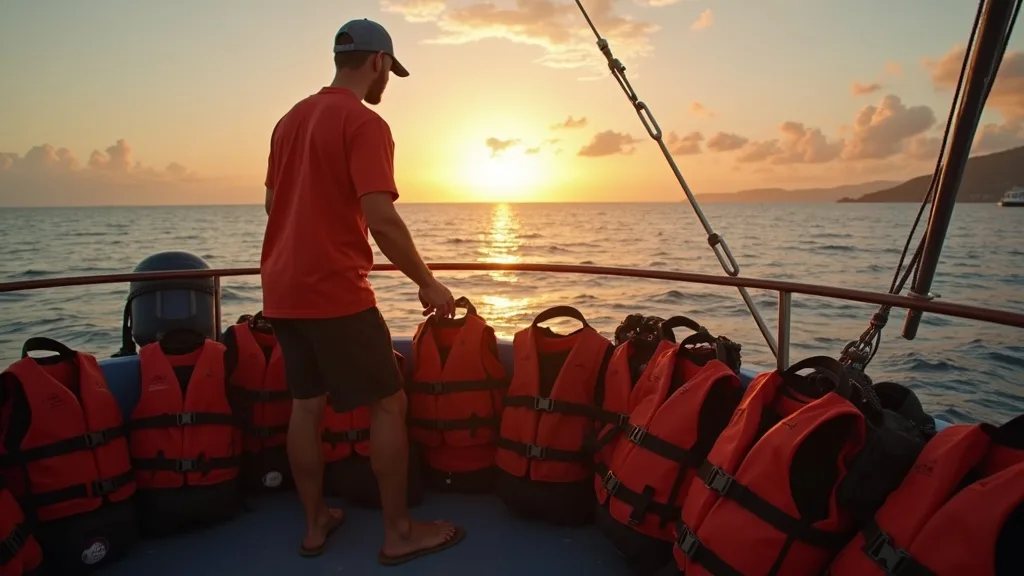
Before the first dive or the first night at anchor: muster points and life jacket locations, life raft and fire extinguisher positions, man-overboard procedure, tender boarding rules, how to call the bridge, the day’s communications status, and — for divers — the site briefing, buddy pairing, maximum depths and recall signal. If none of that happens in the first hours aboard, ask for it. Guests carry a share too: declare medical conditions at booking, be truthful about certification and logged dives, and do not dive beyond your training because the itinerary tempts you.
Want the documents for a specific vessel and dates? Message our concierge desk on WhatsApp at +62 811-3810-8110 or email sales@komodoluxury.com with the boat and your travel window, and we will request the current certificates, crew roster and dive-guide details from the owner. Verified August 2026.
Yes. Ask for the vessel registration, the safety certificate covering your dates, port clearance for the voyage, and hull and passenger liability insurance. We request these from the owner for your charter and send them before payment. We do not publish certificate numbers for vessels we do not own, and we will not claim a certification we have not seen.
Often more than the guest count. As listed August 2026, Lamima carries 20 crew for 14 guests, Silolona 16 for 12, Dunia Baru 18 for 14, Kudanil Explorer 21 for 16, and Aqua Blu 25 for up to 30. High ratios reflect running a ship, a dive centre and hotel service with no resupply nearby. Rosters are confirmed per departure.
Dedicated guides are standard on dive-equipped vessels, but specifics vary by boat and should be in your proposal: number of guides, certification level, guide-to-diver ratio, nitrox availability. Current-driven sites like Cape Kri and Blue Magic demand guides who brief tides and entry timing properly and who enforce the queueing etiquette at Manta Sandy.
Crew stabilise the casualty with onboard oxygen and medical kits, contact shore support by VHF, satellite or Starlink, and run toward the nearest airstrip or clinic, with Sorong the practical evacuation point. Distances are real — Sorong to Arborek is about 53 nautical miles, roughly eight hours. Confirm your vessel’s medical kit and comms, and hold evacuation insurance.
We treat it as a booking condition for divers, and travel insurance is strongly advised for everyone aboard. Cover should include emergency evacuation and hyperbaric treatment, because serious decompression illness here means evacuation via Sorong and onward flight. Chamber availability in the region can change, so verify current status at booking.
Have a Question on This Topic?
Our concierge team is in Sorong, on-island for most of the year. Forward this page along with your specific question — we will reply with an answer grounded in what we have actually seen on the water.